KLOW Peptide Dosage: What the Study Amounts Mean
What matters before you read any amount?
A vial label can't tell what fits your body. KLOW peptide dosage hasn't been proved for people.
No human trial has tested the four-part blend. There's no set human amount for this use.
The numbers below come from separate studies. Some involved people, but most used animals or cells.
Adding those numbers won't create one sound KLOW amount. This page isn't a guide for taking it.
A vial number can't guide your use. It doesn't tell what your body can handle.
What does KLOW peptide dosage mean on this page?
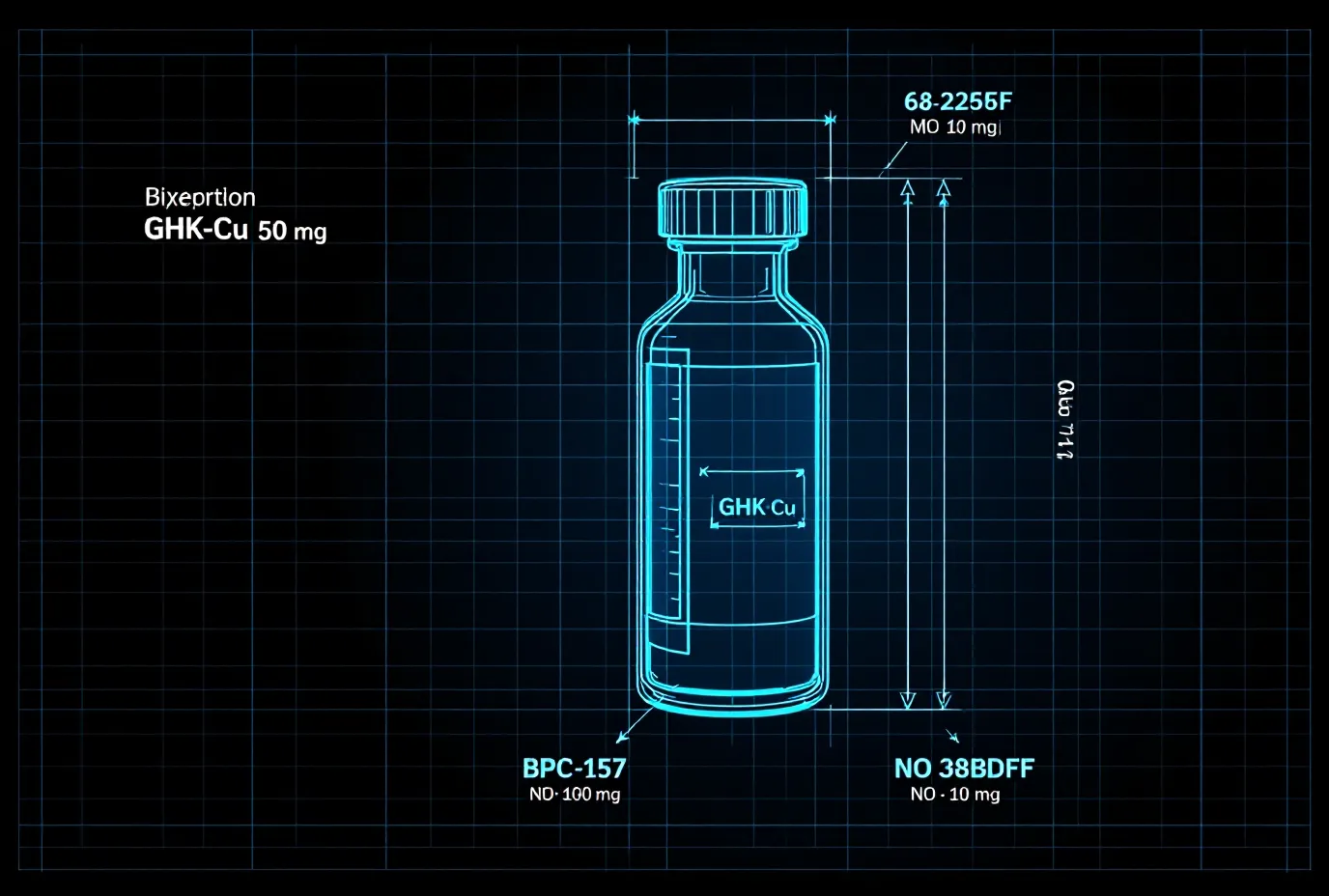
A common research vial holds 80 milligrams total. It has GHK-Cu 50 milligrams, BPC-157 10 milligrams, TB-500 10 milligrams, and KPV 10 milligrams.
GHK-Cu makes up 62.5% of the vial. The label tells you what's inside, not what's safe.
There's no proved human amount for the blend. Animal and cell tests used very different amounts.
You can't turn those facts into one sound KLOW amount. They're here only to explain the studies.
The vial label lists its contents. It can't tell what your body needs.
What amounts did the separate KLOW dosage studies use?
TB-500 and thymosin beta-4: The Malinda 1999 wound study used the full protein. A dish test used 10 picograms and watched skin cells move [1].
The Ruff 2010 trial also used full thymosin beta-4. It was a first safety study, called Phase 1.
People got 42, 140, 420, or 1260 milligrams for 14 days. No thymosin beta-4 group had a grave event [8].
Those amounts can't tell you about the short TB-500 part. The two forms aren't the same.
BPC-157: Three rat groups got 10 micrograms, 10 nanograms, or 10 picograms each day. All three groups did better than rats without it [2].
A 2025 study gave the compound through a vein. Two adults got 10 milligrams on day one and 20 milligrams on day two [6].
GHK-Cu: Cell studies found changes in collagen and gene use [4][5]. A hair trial put liquid with 50 milligrams per milliliter or 100 milligrams per milliliter on skin.
That hair trial also used a second skin medicine for six months [11]. You can't tell which part caused all the hair growth.
KPV: Cells changed at 10 nanomoles per liter. That number tells you the strength of the lab liquid.
Mice drank water with 100 micromoles per liter. They had less bowel swelling, but you aren't a mouse [3].
There's no approved human amount for KPV. None of these figures tells you how to use KLOW.
Study amounts tell you what researchers did. They don't set your use.
How often did KLOW peptide studies give each part?
You won't find one shared study plan. Each part ran on its own clock.
TB-500 and thymosin beta-4: The Ruff 2010 Phase 1 trial ran daily for 14 days [8]. It tested the full protein.
The Morris 2014 rat stroke study began 24 hours after harm. Rats then got four more shots, three days apart [10].
BPC-157: The Staresinic 2003 tendon study used it once daily in rats [2]. Other rat tests ran from days to weeks.
GHK-Cu: The hair study put it on skin each day. That study lasted six months [11].
KPV: Mice got KPV all day in drinking water [3]. The paper can't give you one fixed span.
Rat work suggests KPV and GHK-Cu leave your blood in under one hour. BPC-157 stays longer.
TB-500 isn't the same as the full protein. The four won't stay at equal levels in one blend.
The timing problem belongs to the blend. Mixing the vial again won't change those four clocks.
Each part may leave your blood at a different pace. Blending them won't make the four clocks match for you.
How did studies give and store the separate parts?
When you compare the studies, some put BPC-157 or thymosin beta-4 under the skin. Rat studies also used belly shots for all four.
Other work put GHK-Cu or thymosin beta-4 on skin. Gut studies gave KPV or BPC-157 by mouth or in water.
The vial starts as dry powder. Lab workers add special water made to curb germs.
GHK-Cu brings copper into the liquid. Copper can react with oxygen or the three other peptides.
That reaction could damage the peptides. Your mixture might then act in a changed way. No study has checked this exact mix [4][5].
If you're picturing a shot, remember who got it. The blend itself has no tested route.