KLOW Peptide Research: Who Was Tested and What Changed
Which finding has the best support?
A wound must grow new skin to close. The strongest KLOW peptide finding showed this in rats.
That study used the full thymosin protein, not the blend. TB-500 is only a short piece.
BPC-157 also helped rat tendons mend. KPV eased gut swelling in mice and cells.
GHK-Cu helped human skin make collagen. That strong fiber supports your skin and tendons.
You won't find a study of all four together. Each finding belongs to one part.
Most tests used animals. Others used cells kept in a dish.
Only a few small studies involved people. That leaves little evidence for you.
Keep your sore spot in mind as you read. A rat finding can't prove what happens in you.
What did the full protein related to TB-500 do?
TB-500 comes from thymosin beta-4, a protein in your body. The full protein is much longer than TB-500.
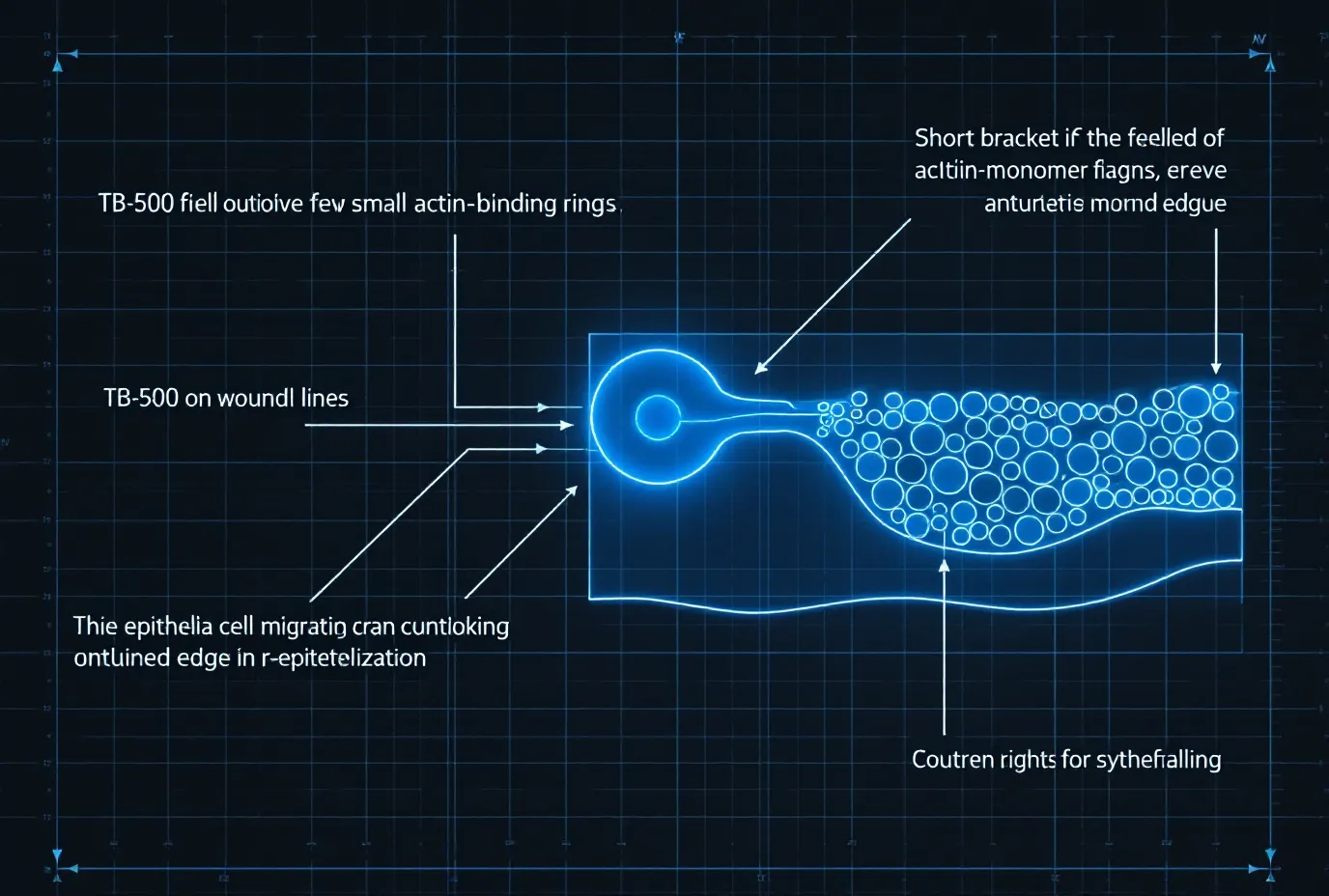
Rat wounds grew more new surface skin with full thymosin beta-4. Growth rose 42% at four days and 61% at seven days.
The wounds also pulled at least 11% more closed by day seven. They made more collagen and grew more blood vessels.
A dish test used 10 picograms, a very small amount. The cells covered twice to three times the old distance [1].
Another rat study found new blood vessels, wound repair, and hair growth [12]. It didn't show that result in people.
A first safety study, called Phase 1, gave full thymosin beta-4 to 40 healthy people. The study used 42 to 1260 milligrams for 14 days [8].
No one had a grave side effect in that small test. It wasn't a TB-500 study.
A 2026 Sports Medicine review found few safety studies with people. That leaves a grave risk unknown for you [7].
TB-500 and full thymosin beta-4 aren't the same. The main wound studies didn't test the short piece.
The Malinda 1999 wound study tested full thymosin beta-4 [1]. The Ruff 2010 Phase 1 study did too [8].
The short part may help cells move. You still don't get the other parts of full thymosin beta-4.
Claims that give both forms the same results go too far. You can't give TB-500 every result from thymosin beta-4.
If your wound needs care, this study can't direct it. A protein test won't predict your result.
What happened to rat tendons after BPC-157?
BPC-157 has been tested in rats for decades. Your eye may go to the tendon findings.
Researchers cut through rat Achilles tendons. Rats given BPC-157 healed better than rats without it.
Three groups got 10 micrograms, 10 nanograms, or 10 picograms per rat each day. Tendons grew stronger, and collagen lined up better [2].
Tendon cells also spread across a dish. You see that effect at all three amounts.
BPC-157 helped hurt tissue grow new blood vessels. Those vessels bring blood to your healing tendon.
The compound also changed how hurt tissue controlled blood flow. You don't need the string of lab names to grasp that result.
Tendon cells became more open to growth hormone. That hormone may matter as your tendon mends.
The first human safety report came in 2025. The study gave BPC-157 through a vein to 2 adults.
One got 10 milligrams on day one and 20 milligrams on day two. They were a man and a woman.
Neither had a noted bad event or blood-test change [6]. For you, two people can't prove benefit or safety.
Rat work from 2025-2026 looked at other harm. The compound reduced liver, kidney, and lung injury in rats [13].
In a 2026 rat study, an opening between the windpipe and skin closed [14]. A 2025 review covered many claimed uses for BPC-157 [15].
Tendon strength matters more than a lab code. You can't know if your tendon would heal the same way.
What did GHK-Cu change in skin and hair studies?
Scientists found GHK-Cu in human blood in 1973. At age 20, blood may hold 200 nanograms per milliliter; by 60, it may hold 80 [4].
A 2015 review found more collagen in 70% of treated women. Vitamin C reached 50%, while a form of vitamin A used on skin reached 40%.
GHK-Cu also helped make skin's support tissue. Treated skin looked firmer and less lined than with placebo [4].
Another study watched how cells used genes. It counted only gene changes of 50% or more.
Of that group, 59% became more active and 41% became less active. The paper linked 41 changes to cell cleanup and DNA repair [5].
In your reading, you may see claims about 4,000 genes. The paper's table lists about 2,100, so the larger claim goes too far.
One fair trial tested a skin treatment on 45 men with hair loss. It mixed GHK with a second skin medicine, not GHK-Cu by itself.
The liquid held either 100 milligrams per milliliter or 50 milligrams per milliliter. Both strengths grew more hair than placebo over six months.
The men had no noted bad events [11]. Other bowel work found cell changes tied to swelling.
You can't feel those cell changes [4][5]. The gene count won't tell you how your skin will look.
Collagen's role may be clear to you. The trial still can't promise your result.

What happened when KPV reached gut cells?
KPV comes from a hormone your body makes. That hormone helps your body calm swelling.
KPV kept some of that calming effect. Its small size lets your cells take it in.
Researchers used 2 kinds of human cells in dishes. One came from the gut, and one came from the immune system.
At 10 nanomoles per liter, KPV lowered several swelling signs. That number tells you how much KPV was mixed into the dish.
KPV also lowered two proteins that help drive swelling. Their names end in 6 and 8.
A carrier in the cell wall brought KPV inside. The liquid held about 160 micromoles per liter, which tells you the amount used [3].
Mice with two forms of bowel swelling drank KPV. Their water held 100 micromoles per liter.
The mice had less bowel swelling under a microscope [3]. That mouse result doesn't answer your own gut question.
Human work on KPV remains thin. There isn't an approved KPV drug.
When your bowel swells, you may get pain and loose stools. Only a human study could show if KPV helps you.
Has a fair study tested all four parts together?
The KLOW blend hasn't had a test against placebo. No study has compared it with fewer parts.
Your blood clears the four parts on separate clocks. KPV and GHK-Cu leave faster than BPC-157.
The four won't stay level for the same span. The blend sounds possible but remains unproved.
You'll find every paper on the KLOW references page. You can trace each finding to one part.
The missing blend trial matters to your choice. Hope and user reports can't fill that gap.